How to Play in the USHL: The Complete Guide to Tryouts, Drafts, and the NCAA Path
A complete guide to playing in the United States Hockey League — tryouts, the Phase I & II Draft, tenders, NCAA commitments, and the pathway for European players.
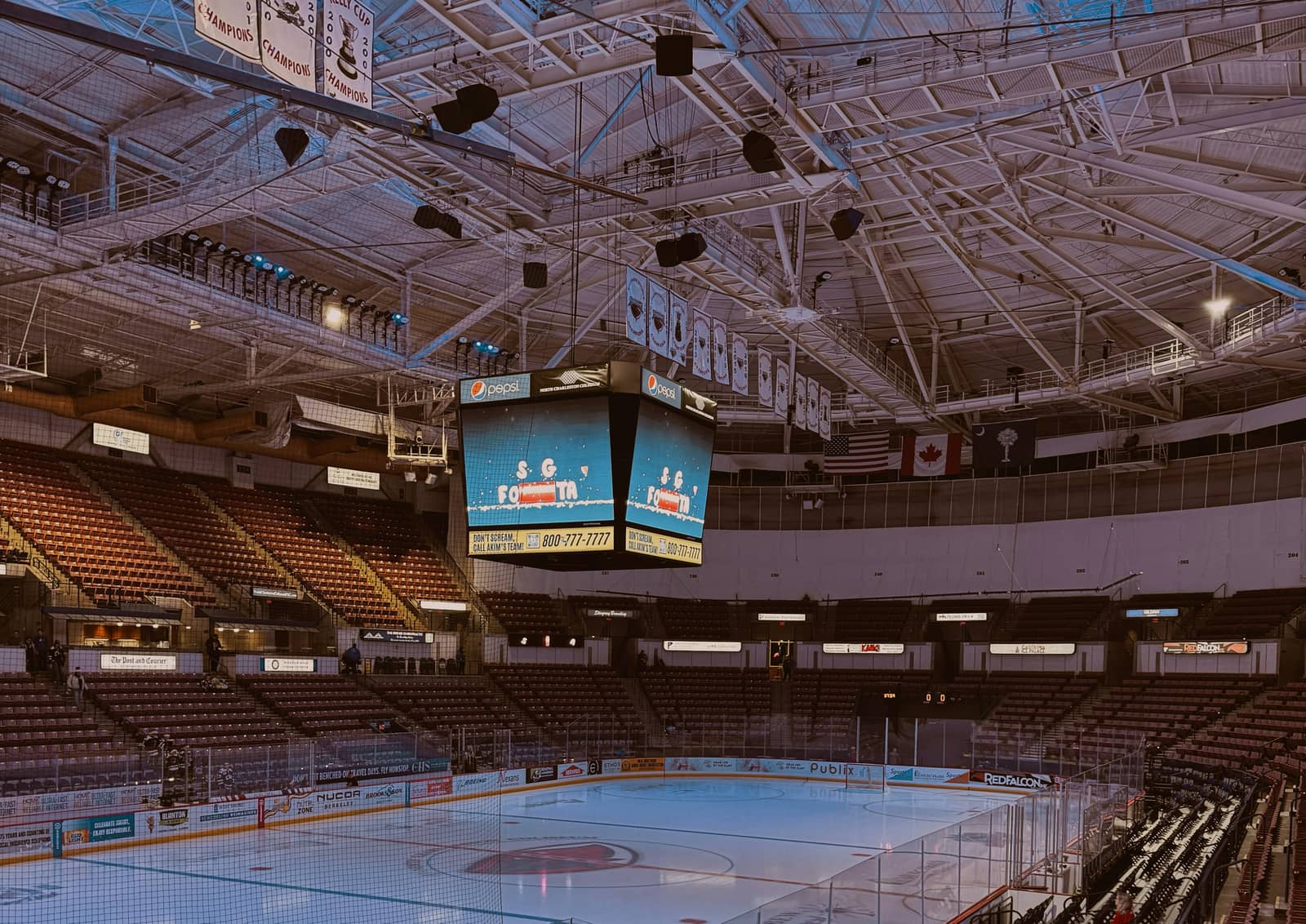
The United States Hockey League is the single most direct line a young player can take from junior hockey to NCAA Division I and the NHL Draft. More than 50% of NCAA Division I men's hockey players and roughly a quarter of current NHL players have USHL experience. If you're a 15-, 16-, or 17-year-old serious about college hockey or a professional career, the USHL is the league you need to understand.
This guide walks through exactly how players make it into the USHL — the age categories, the two-phase draft, the tender system, what tryouts actually look like, the financial picture, and what happens after. It also covers the pathway European players take into the league, which is increasingly relevant as more teams scout abroad.
What the USHL Actually Is
The USHL is the only Tier I junior league in the United States sanctioned by USA Hockey. It has 16 teams playing a 62-game regular-season schedule, mostly in the Midwest, running from mid-September through early April with playoffs (the Clark Cup) in late spring.
It is an amateur league. Players don't get paid a salary, but they also don't pay anything to play — more on what's covered below. The competitive level is the highest of any U.S. junior league. USHL games are heavily scouted, and high-profile games draw scouts from across the NHL and NCAA. USHL alumni accounted for 53 total selections in the 2025 NHL Draft, including 8 first-round picks. According to the league, no single junior hockey league in the world has produced more drafted players since 2012 — though the three CHL leagues (OHL, WHL, QMJHL) combined produce more picks in most years.
For a serious player, the USHL is not just a development league — it's an audition. You're playing in front of NCAA coaches and NHL scouts on a regular basis.
Age Categories and Eligibility
The USHL is a 16-to-20-year-old league. Phase 1 of the draft is for players in the 16-year-old age category — for the 2026 USHL Draft, that meant the 2010 birth year. Phase 2 covers the 17-year-old through 20-year-old age categories (for 2026, the 2006–2009 birth years).
A few things to understand about eligibility:
- "Age category" is determined by birth year, not your actual age on any given date.
- You don't have to register or apply for the draft. Any player in those birth years is automatically eligible.
- You don't have to be American. European, Canadian, and other international players are eligible and regularly drafted, though Canadian players who have signed with a CHL club are typically committed there.
Once a player ages out — meaning they turn 21 during the season — they're done with USHL eligibility. Most players play one to three seasons before moving on to college or pro.
The USHL Draft: Phase I and Phase II
Every USHL roster spot is competed for through a two-phase draft held in early May. Understanding how it works is essential because nearly every player who plays in the USHL is either drafted, tendered, or signed as a free agent following an open tryout.
Phase I — The Futures Draft
Phase I is held first, usually on the Monday of the first full week of May. Each team makes fifteen (15) selections, all from the youngest eligible birth year. For the 2026 USHL Draft, that was the 2010 birth year — players who will be 16 during the next season.
Phase I picks are sometimes called "Futures" picks because most of these players don't immediately join their drafting team. They go on the team's affiliate list and may play one or two more seasons of AAA or prep school hockey before joining the USHL roster full-time at 17 or 18.
The order of selection is reverse standings — the lowest team in the previous regular season picks first, like the NHL Draft.
Phase II — The Open Draft
Phase II takes place the morning after Phase I. Each team continues making selections until their 50-man Initial Protected List is full. Phase II is open to any eligible player not already protected by another USHL club, which means it includes:
- Players in the 17- to 20-year-old age categories
- European players from junior or even senior leagues
- Players from Canadian Major Junior who weren't picked up
- Older AAA, prep, and Tier II players who didn't make it through Phase I
The number of selections per team varies. In the 2026 draft, the Lincoln Stars drafted 28 players across both phases combined, while the Dubuque Fighting Saints added 30 total. A team with more affiliate players already protected will make fewer Phase II picks.
The Tender System
Before either phase of the draft, USHL teams can sign "tenders" with top prospects. The USHL tender process allows teams to sign up to two players born in the youngest eligible birth year in exchange for their first- and second-round picks in the Phase I Draft. Each tendered player will join their respective team's roster for the next season and play at least 55% of their regular-season games.
In practice, this means the best 16-year-olds in North America often skip the draft entirely. They sign a tender in the fall or winter of their 15-year-old season, and they're locked in for the following year. Teams use tenders to lock down players they're certain about — usually a 100-point AAA midget player or a top prep school standout.
If you're a parent or player evaluating offers, a tender is a guaranteed roster spot at age 16, in a tuition-free Tier I environment, with a clear runway to a college commitment. It's not a small thing to receive one.
How Scouts Find Players
USHL teams scout aggressively year-round. The main pipelines:
AAA midget hockey (especially U16 and U18 levels). Programs like Shattuck-St. Mary's, Mount St. Charles, the Chicago Mission, Detroit Honeybaked, and others are scouted intensely. USHL Phase I picks come overwhelmingly from this level.
U.S. prep schools and the NTDP. The National Team Development Program (NTDP) plays in the USHL as a full member team, and its players are essentially pre-selected. Top New England prep schools also produce a steady stream of USHL picks.
Canadian junior and prep hockey. Especially players from Quebec prep, Ontario midget, and Western Canadian programs who aren't tied to the CHL.
European junior leagues. This is where you'll find Phase II selections from Sweden's J20 Nationell, Finland's U20 SM-sarja, and the top junior tiers in Czechia, Slovakia, Germany, and beyond.
Showcases and tournaments. The USHL Fall Classic, USHL Combine, USA Hockey Select Camps, World Selects Invite, and major prep tournaments are all heavily scouted. Players often get their first real look at these events.
Open tryouts and main camps. Every USHL team runs spring and summer camps that any player can register for. Undrafted players have signed roster contracts directly out of these camps. It's a long shot, but it happens every year.
The honest truth is that being seen is half the battle. Most players who get drafted have been on USHL scouts' radar for a year or more before their name gets called. If you're playing high-level hockey but you're not in one of the main pipeline programs, building a verified, searchable profile that scouts can actually find matters.
Help your athlete get noticed
Build a professional sports CV for your child and get them in front of recruiters across the world.
Get Started FreeWhat Tryouts Actually Look Like
Every USHL team runs a few different camp formats:
Spring Prospects Camps. Held in April–May. Open registration. Lower commitment, lower cost (sometimes free, sometimes a small fee). This is the entry point for undrafted players hoping to catch a coach's eye.
Main Camp. Held in mid-summer. By invitation only — drafted players, tendered players, returning veterans, and select prospects invited from spring camp. Main camp is where actual roster decisions get made. Most teams cut from 80+ players down to a final roster of 23 over the course of a week.
Affiliate camps. Some teams run smaller affiliate-specific camps for their drafted but not-yet-rostered players, focused on development and tracking.
What scouts and coaches are evaluating at camps: skating (specifically first-three-step explosiveness), hockey IQ in compact spaces, defensive structure, and competitiveness. At the USHL level, raw skill is assumed — every player at main camp can stickhandle. What separates the kids who make it from the kids who don't is whether they can compete in a smaller, faster, more physical game than they're used to.
The Money: It's Tuition-Free
This is one of the things that makes the USHL unique. Free tuition. All training, coaching, and developmental services are covered by the team and the league. All players are provided with sticks, pants, gloves, helmets, jerseys, and socks at no cost. Housing costs are covered by team through a network of billet homes in the local community. Each player has their own private sleeping area, meals, laundry, and family services. Travel for road games — bus, hotels, meals — is also covered.
(Billet experiences vary. Most are positive and many players form lifelong relationships with their host families. But the fit between player and family matters — and not every placement works. Teams do their best with selection and questionnaires, but it's worth knowing in advance that a billet placement is more like joining a new family than booking a room.)
Compared to AAA midget hockey — where families commonly spend tens of thousands per season on club fees, equipment, travel, and trainers — the USHL is effectively free. The only meaningful costs for a USHL family are travel for parents to watch games (which is on you, not the team) and minor personal expenses for the player.
For international players, there can be additional costs around visas and IIHF transfer fees, but these are small relative to the value of a Tier I development environment.
In April 2026, the USHL announced its Standard Player Development Agreement (SPDA), which formalized benefits across all 16 clubs. The SPDA adds support for travel and secondary education and reimbursements for training and career-ending injuries, on top of the existing housing, equipment, meals, and academic support. The league launched the SPDA specifically in response to the NCAA's decision to allow CHL players to play college hockey — the USHL needed to make its development environment more competitive against major junior, which has long offered education packages and stipends.
This matters for any player evaluating the USHL against CHL or European options: the financial picture for a USHL player is better in 2026 than it was even a year ago.
The USHL and major junior are the two leagues where players don't pay to participate, with most living, equipment, and travel costs covered. (Major junior players now also have NCAA eligibility, which we'll come back to.)
The NCAA Pathway
This is the main reason most players want to be in the USHL. During the 2024–25 season, USHL alumni held over 50% of NCAA Division I roster spots, and over 25% of NHL players had USHL experience. More than 800 USHL alumni were on Division I college hockey rosters going into the 2025–26 season. More than 80% of active USHL players hold NCAA Division I commitments.
In other words: if you make a USHL roster and you can hold your own there, your chance of getting an NCAA Division I offer is very high.
The recruiting cycle works like this:
- NCAA coaches identify players in their U16 and U17 seasons through scouting at AAA tournaments, prep showcases, and increasingly the USHL Combine.
- Players commit verbally to college programs — sometimes as early as 16, more commonly at 17 or 18.
- They play one to three seasons in the USHL after committing, then begin their NCAA careers.
One important recent change: In September 2024, Arizona State received a commitment from a Canadian Hockey League player when Braxton Whitehead agreed to join the program for the 2025-26 season. The NCAA's long-standing prohibition on CHL players had become legally untenable under the new student-athlete compensation framework (the NIL era), and Whitehead's commitment effectively forced the issue. It took less than two months for the NCAA to remove the prohibition and allow former major-junior players to play college hockey in the United States.
This is a major and ongoing shift. CHL players (OHL, WHL, QMJHL) can now play NCAA hockey, which means the USHL no longer has a monopoly on the college pipeline. The full impact is still playing out — NCAA hockey is also getting older as more players take multiple junior seasons, USHL roster spots are getting tighter especially for imports and late bloomers, and the SPDA was the USHL's direct response to all of this. The USHL still has structural advantages: a younger average age, a tighter tie-in to U.S. college recruiting cycles, and a longer history of feeding D1 rosters. But it's no longer the only Tier I path.
If you want to compare the two paths in detail, see our piece on the OHL and the broader CHL system.
The European Pathway
Here's where things get interesting if you're a player from Sweden, Finland, Czechia, Slovakia, Germany, Latvia, or anywhere else in Europe. The USHL is genuinely open to you — but the pathway is different. What follows is a summary; for the full detail — import roster limits, IIHF transfers, visas, and how the 2025 NCAA rule change reopened the route — see our dedicated guide on how European players get to the USHL.
Most European players enter through Phase II of the Draft. They aren't typically selected in Phase I (which is dominated by U.S. and Canadian midget players). Instead, USHL teams scout European junior leagues — especially J20 Nationell in Sweden, U20 SM-sarja in Finland, and the top Czech and Slovak junior tiers — and pick high-potential players in Phase II.
A recent example: In the 2026 draft, Sioux Falls Stampede used the 20th overall pick in Phase II on Swedish-Belarusian forward Tim Tuzin, who tallied 26 points in 35 games for Luleå HF U20 in Swedish U20 Nationell play and was ranked 130th among European skaters eligible for the 2026 NHL Draft by NHL Central Scouting.
Another: Michal Pradel, a Slovakia native goaltender for the Tri-City Storm, was named to the 2025–26 All-USHL Third Team. He's a Detroit Red Wings prospect and Colorado College commit, having posted a 2.75 goals-against average and .911 save percentage in 38 games.
Czech, Slovak, Finnish, and Swedish players regularly make USHL rosters every year. Heikki Ruohonen was the first overall selection in the 2024 USHL Draft, drafted by the Dubuque Fighting Saints — another Finnish name on the top of the USHL board.
What the European pathway actually requires:
-
Visibility. You need to be playing in a league that USHL scouts watch. The Swedish, Finnish, Czech, Slovak, and German junior systems are all scouted. Smaller national leagues (Latvian, Lithuanian, Norwegian, Polish, etc.) are scouted less consistently — players from those systems often need to first move to a bigger European junior league or attend a high-profile tournament to get on radar.
-
A way to be found. Most European players don't have direct relationships with U.S. junior scouts. Profiles on platforms like Athletedom — which tracks European junior leagues including J20 Nationell, U20 SM-sarja, the DEL, and Czech and Slovak junior systems — are how a lot of mid-tier prospects make sure their stats and video are accessible to NCAA and USHL scouts looking for international talent.
-
U.S. immigration status. European USHL players need appropriate U.S. immigration status, and the correct classification depends on the player's school and team arrangement. The team's hockey operations staff and its school or immigration advisers typically determine the right route and guide players through it once they sign.
-
A plan for school. Most USHL teams enroll their players in local public or private high schools, or in online programs that lead to a U.S. high school diploma. This matters for NCAA eligibility downstream — you need an NCAA-approved academic transcript.
-
English. It doesn't need to be perfect, but you need enough to function in the locker room, with billet families, and in school. Many European players arrive with rough English and become fluent in a year.
The European pathway is real, but it's narrower than the U.S. domestic pathway — significantly so. USHL teams still heavily prioritize North American players. European import slots per team are limited. For most European junior players, getting drafted to the USHL requires elite production at the top junior level, national team exposure, or NHL Draft buzz. A Latvian, Slovak, or Norwegian U18 with decent stats playing in their domestic junior league is not realistically getting a USHL Phase II call without one of those bigger signals.
That said, the door does open every year for European players who put themselves in front of the right scouts. You have to be either selected for international tournaments (World U17, World U18, Hlinka Gretzky, World Junior A Challenge) or have your tape and stats easily accessible to North American scouts. With CHL leagues now also competing for NCAA-bound European talent, the bar has gotten higher in the last 18 months, not lower.
This is the gap Athletedom is built for — making European players findable. Your stats from SHL, the DEL, or any of the European junior systems are searchable in one place, with verified profiles that scouts and teams can browse.
Showcases and Combines Worth Knowing About
If you're trying to get on USHL radar from anywhere in the world, these events matter:
- USHL Fall Classic (September, Pittsburgh). Every USHL team plays in front of hundreds of NHL scouts to open the season. All 16 teams will play their first two regular-season games at the UPMC Lemieux Sports Complex in front of hundreds of NHL scouts, general managers, and executives in preparation for the 2026 NHL Draft.
- USHL Combines (Green Bay, Wisconsin). Invitation-only events held in April and May (for Phase I and Phase II draft prospects) and July (Player Development Combine for younger prospects). Players play multiple games in front of USHL coaches, scouts, NHL Central Scouting, and NCAA coaches, plus off-ice physical and cognitive testing.
- World Junior A Challenge (December, Canada). Top junior-age players represent their countries. USHL players often make the U.S. Junior Select Team.
- Hlinka Gretzky Cup (August, Czechia/Slovakia). U18 international tournament — a major scouting event for the European pipeline.
- CCM USA Hockey Select Camps (summer). For top American 14- to 17-year-olds.
If you're a European player and you're not getting picked for your national U17 or U18 team, your visibility to USHL scouts drops significantly. Performing at international tournaments is the most reliable way to get on Phase II draft boards.
Affiliate Players and Walk-On Paths
Not every player who plays in the USHL is drafted. There are two other ways onto a roster:
Affiliate List. To be an eligible affiliate player, the player must be in the 18-year-old age category or younger. Teams must have drafted the player or added him as a free agent to the roster, and the player must acquire veteran player status (10 games played). Affiliate players can replace a 16-year-old age-category player lost after the USHL Draft. In practice, affiliate players are usually drafted Phase I picks who haven't quite made the full roster yet — they play some games when injuries open spots and develop in lower leagues otherwise.
Free Agent / Tryout. A player can sign as a free agent after attending a team's spring or main camp. This is the longest shot, but it's a real path. Every year a small number of undrafted players make USHL rosters out of camp.
Realistic Odds and What to Expect
The USHL is hard. There are 16 teams, roughly 23 roster spots per team, and an enormous pool of competing players globally. Of every 100 AAA 15-year-olds in North America, only a small fraction will ever play a USHL game.
But here's the encouraging math: if you make a USHL roster and produce meaningfully, your odds of getting to NCAA D1 are very high. The league-wide commitment rate is over 80%, but that's heavily weighted toward high-end players. A first-round Phase I tender pick has a near-certain D1 future; a 20-year-old free agent grinder playing a fourth-line role faces a tougher path, with options including lower NCAA divisions, ACHA, or moving on from hockey. The 80% number is the league average — your individual odds depend on role, age, production, and draft pedigree.
If you have a strong USHL career, your odds of getting drafted by an NHL team are meaningfully real for top performers — 53 USHL players were selected in the 2025 NHL Draft alone, with 8 in the first round. For depth roster players, getting an NCAA scholarship is the realistic ceiling, which is still a major outcome.
The USHL is also forgiving in one specific way: there are multiple years of eligibility. Many players need a year or two to grow into the league. A 17-year-old who barely makes a roster as a fourth-liner can become a 19-year-old All-USHL First Team selection. The development arc is long enough that late bloomers can still get there.
What to Do Right Now
If you're a player or parent trying to position for the USHL:
- Get your stats and game footage organized. Whether you're in U16 AAA, in J20 Nationell, in U20 SM-sarja, or anywhere else, scouts can only find you if you can be found.
- Build a verified profile on a platform scouts use. A player without a discoverable profile is a player who only gets found through personal connections, which most international players don't have.
- Play in the right places. If you're North American: top AAA, prep, or NTDP-feeder programs. If you're European: top tier of your national junior league, plus your U17 and U18 national teams.
- Get to scouted events. International tournaments, USHL Combine if invited, major showcases. Being in the building matters.
- Consider representation. If you're navigating the system from outside North America, or from outside the main pipeline programs, getting professional guidance can be the difference between getting on a Phase II draft board and being completely missed. Athletedom offers agency services for players navigating the recruiting process.
Get scouted on Athletedom
Create your player profile, showcase your stats, and connect with scouts and teams worldwide.
Create Your ProfileThe USHL isn't easy to get into. But the pathway is more open than most players realize — especially for European players who put themselves in the right places and make themselves findable. Tier I tuition-free hockey, a direct line to NCAA Division I, NHL Draft visibility every weekend: it's a development environment that doesn't exist anywhere else in this exact form.
If you can play, the league is there for you to reach.
Have questions about the USHL pathway? Get in touch with our team. Building a player profile on Athletedom is free — start with your name, your league, and your stats, and make sure scouts can find you.
Frequently Asked Questions
Is the USHL free to play?
Yes. The USHL is fully tuition-free at the Tier I level. Teams cover housing through billet families, equipment, travel, and meals for road games. Players and families don't pay to participate.
How old do you have to be to play in the USHL?
USHL eligibility runs from the 16-year-old age category through the 20-year-old age category, which currently means players born between 2006 and 2010. Phase I of the draft is for the youngest eligible birth year (currently 2010), and Phase II is for the older age categories (currently 2006–2009).
Can European players play in the USHL?
Yes. European players are eligible and routinely drafted in Phase II. European players need appropriate U.S. immigration status, with the correct classification depending on the player's school and team arrangement. The number of European imports per team varies, but several USHL clubs draft from European junior leagues each year.
How do you get drafted to the USHL?
Most drafted players come through AAA midget hockey, U.S. and Canadian prep schools, or European junior leagues. USHL teams scout showcases, tournaments, and league play year-round. Players don't need to register — eligibility is based solely on birth year.
What's the difference between the USHL and NAHL?
The USHL is the only Tier I junior league sanctioned by USA Hockey. The NAHL is the Tier II league. Both are tuition-free, but the USHL is considered the more direct pipeline to NCAA Division I hockey and the NHL Draft. The NAHL is a strong development path on its own, and many players move from the NAHL up to the USHL after a season.
How many USHL players go to college hockey?
More than 80% of current USHL players hold NCAA Division I commitments. During the 2024–25 season, USHL alumni held over 50% of NCAA Division I roster spots, and 56% of players in the 2026 NCAA Tournament field were USHL alumni.
Related Articles
How to Play in the NAHL: Tryouts, Tenders, the Draft and the College Path
How to get into the North American Hockey League in 2026–27: what it costs, who is eligible, how tenders, the drafts and combines work, and where NAHL players go next, with Athletedom's own league data.
15 min readPathwaysHow to Get Scouted in Hockey: The 2026 Guide
How hockey scouting works in Europe — IIHF transfers, under-18 rules, try-outs, contract limits and the new NCAA Division I eligibility model, explained for 2026.
16 min readPathwaysHow European Players Get to the USHL: Imports, Drafts, Visas and the NCAA Path
A complete guide for European players and parents on reaching the USHL — import roster rules, how the USHL Draft works for Europeans, IIHF transfers, visas, and how the 2025 NCAA rule change reshaped the pathway.
11 min read